

Honey with a spice in it, not a variety
Spiced honey
Honey with cinnamon, vanilla or another warm spice in it. The idea is at least as old as Rome, and it comes with one modern rule about the name.
- What it is
- Honey with a spice added
- On the label
- The flavor, then the word honey
- Oldest recipe here
- Roman: honey and ground pepper
Updated

- honey, plus cinnamon or vanilla
- a Roman packed it for the road
- the label has to name the flavor
Honey that brought a friend
Everything else on the honey shelf is one ingredient. This is two.
Everything else on the honey shelf is one ingredient. This is two.
Spiced honey breaks that rule on purpose. A cinnamon stick goes in, or a vanilla pod, and the jar becomes something new: a honey product, in the trade's own term, made in whole or in part of honey.1
That is why this is a style and not a variety. A variety is named for the flowers the bees worked. A spiced honey is named for what a person put in afterwards, and any honey can be the one it goes into.
Honey with a spice such as cinnamon or vanilla added to it. It is a honey product, not a variety of honey.
Keep asking Mel →No. Bees make the honey; a person adds the cinnamon afterwards. A variety is named for flowers, a spiced honey for what was added.
Keep asking Mel →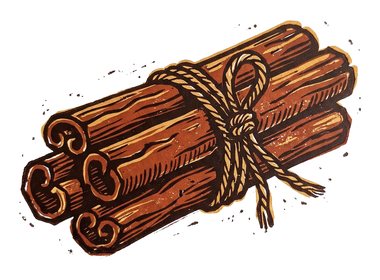
Recipe number two
The Roman cookbook known as Apicius gets to spiced honey on its first page.
The book opens with a drink. Recipe one, "Fine Spiced Wine," begins by heating honey with a little wine and skimming it, then adds four ounces of crushed pepper, some mastic, a little nard or laurel leaf, saffron and roasted date stones, and only then the rest of the wine.3 An early editor thought it the right place to begin, since Roman meals started with a drink of this kind.3
Recipe two is the one that belongs on this shelf. It is called the Honey Refresher for Travelers, and it is a jar of spiced honey: honey flavored with ground pepper and skimmed. On the road, the traveler put some of the honey in a cup and mixed in wine as needed.3
Recipe two is a jar of spiced honey, packed for the road.
One caution from the translator. "Pepper" in these recipes may not mean pepper. Next to honey and sweet things, he notes, the word could stand for something like allspice, or for spice in general.3 So the oldest spiced honey on this page may have tasted closer to a modern cinnamon jar than it sounds.
At least Roman. The cookbook known as Apicius has a "Honey Refresher for Travelers" as its second recipe: honey flavored with ground pepper, mixed with wine in the cup.
Keep asking Mel →Apicius names pepper, mastic, nard or laurel leaf, saffron and roasted date stones. The translator notes "pepper" may have meant spice more generally.
Keep asking Mel →Three things people get wrong about spiced honey
Why the label says "flavored"
American labeling guidance is short and plain about jars like this.
A jar that holds only honey is called honey, and needs no ingredient list, because there is only one ingredient.4
Add a flavor and both things change. If the label plays up that flavor, in words or in pictures, the Food and Drug Administration's guidance says the name should carry it, as in "raspberry-flavored honey," and the jar should have an ingredient list with everything in it, heaviest first.4
Not under FDA guidance. Honey with an added flavor should be named for it, such as "cinnamon-flavored honey," and carry an ingredient list.
Keep asking Mel →No. FDA guidance says a single-ingredient food does not need one. A list appears when something has been added.
Keep asking Mel →What to look for
On this shelf the back of the jar matters more than the front.
Turn it round and read the ingredients. The list will tell you whether the cinnamon is cinnamon or a "natural flavor," which is the wording the guidance itself uses in its example.4 Neither is wrong. They are different jars, and now you know which one you are holding.
The Romans, for what it is worth, would have understood the need to check. The same first book of Apicius includes a tip for making spoiled honey saleable by mixing one part of it into two parts good, which the translator calls contemptible, and a test for honey that involves setting a honey-dipped plant alight.3
Browse Sweet honey
As an Amazon Associate, Melvea earns from qualifying purchases.
Read the ingredient list. It shows whether the spice itself or a flavor was used, and honey should be the first ingredient.
Keep asking Mel →The trade's name for a thick honey-based product that may be blended with fruit, nuts, flavors or spices.
Keep asking Mel →Still curious about spiced honey?
It is a honey product. Honey sold as honey has nothing added, so once a spice goes in, the name on the label should say so.
Keep asking Mel →They carried it. The traveler's recipe in Apicius has honey flavored with pepper, mixed with wine in the cup when wanted.
Keep asking Mel →before you go
Questions people ask.
What is spiced honey?
Honey with a spice such as cinnamon or vanilla added. It is a style, not a variety: any honey can be used.
Is spiced honey pure honey?
No. Pure honey is a single ingredient. With a spice or flavor added it becomes a honey product and should be labeled for what is in it.
What should the label say?
Under FDA guidance, a name that carries the flavor, such as "cinnamon-flavored honey," and an ingredient list in order of weight.
How old is the idea?
The Roman cookbook known as Apicius gives a traveler's honey flavored with ground pepper as its second recipe.
That is the end of this page. Go and taste something.
Sources.
- 1National Honey Board. Definition of Honey and Honey Products. Approved June 15, 1996; updated September 27, 2003. Hosted copy. Open source
- 2Codex Alimentarius Commission. Revised Codex Standard for Honey, CODEX STAN 12-1981, Rev. 2 (2001), section 3.1. Open source
- 3Apicius. De Re Coquinaria, Book I, recipes 1, 2, 17 and 18. Translated by J. D. Vehling as Cookery and Dining in Imperial Rome (Walter M. Hill, 1936; public domain). LacusCurtius transcription. Open source
- 4US Food and Drug Administration (2018). Proper Labeling of Honey and Honey Products: Guidance for Industry. February 2018. Open source