

Coriander honey is a monofloral honey from the nectar of coriander blossoms (Coriandrum sativum), produced across Russia, Ukraine, Romania, Turkey, and parts of India.
Coriandrum sativum — the same plant whose seeds are the warm-spice anchor of so many North African, Indian, and Middle Eastern dishes — is cultivated for seed production across the Black Sea steppe (Russia, Ukraine, Romania, Bulgaria) and into Turkey and parts of India. Bees worked the bloom for the seed-crop pollination contracts long before the honey was sold as a varietal, and the resulting monofloral carries the warm-spice character of the plant in the bottle.
Coriander is an Apiaceae-family umbellifer — the same plant family as carrot, dill, fennel, and parsley — and like its relatives it puts out broad lacy white-to-pale-pink umbels in early summer. The seed crop is grown at scale for the global spice trade, with the Black Sea steppe (southern Russia, eastern Ukraine, Romanian and Bulgarian agricultural belts) as the historical center of production. Turkey and parts of north India contribute additional acreage.
Bees work the bloom heavily for nectar across the seed-crop pollination window — typically June through mid-July at northern latitudes — and the honey is among the most recognizable monoflorals in the regional Russian and Ukrainian tradition. Koriandrovy med is a long-established category in the Russian honey trade; equivalent labels exist in Ukrainian, Romanian, and Bulgarian markets.
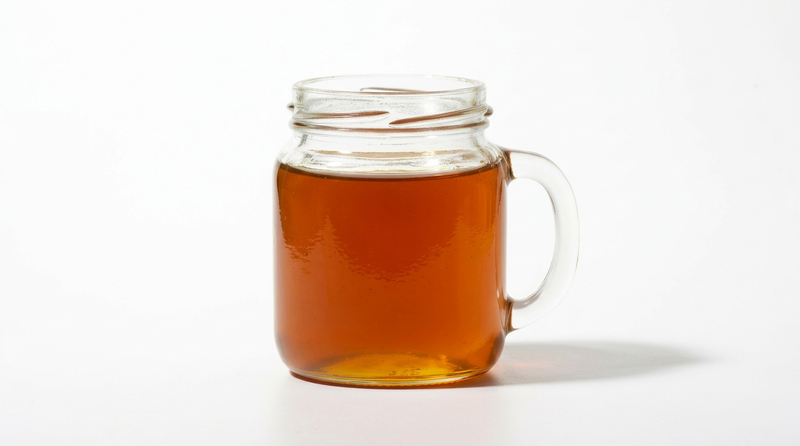
The honey is warm-amber to medium-amber in color, with a viscous body and a spiced palate that reads identifiably as coriander on the nose and the entry. The character comes from volatile aromatic compounds in the floral nectar — relatives of (but not identical to) the linalool-rich compounds that define coriander seed oil. Crystallization is moderate; the honey often arrives at retail in a partially crystallized state.
The wider commercial English-speaking honey trade has been slower to adopt coriander as a featured monofloral, but specialty importers, Eastern European immigrant grocers, and Mediterranean food shops carry it where regional demand justifies.
Coriander seed (dhana, kishneez, culantro seed) has been studied for centuries in Greco-Arabic and Ayurvedic herbalism, and modern laboratory work on the seed and the steam-distilled essential oil documents linalool-dominant volatile chemistry with associated in-vitro antimicrobial and digestive-tract bioactivity. That work is about the seed and the oil, not about the honey.
Bees collect floral nectar, not seed tissue and not steam-distilled essential oil. The honey carries aromatic compounds related to the coriander flower's volatile profile (which is why the honey tastes recognizably of coriander), but at concentrations and in a chemical context entirely different from the concentrated seed-oil extract. The page does not carry the seed's or the oil's documented properties forward as honey claims.
Coriander honey is one of the more clearly spiced monoflorals — the herbal-spiced edge that defines the seed reads through the nectar character as well.
A spiced-herbal honey, closer to a culinary infusion than to a typical sweet floral profile.
Coriander honey is unusual on two counts — the recognizable spice character it carries from the plant, and its origin as the by-product of a global commodity crop.
Most floral honeys lean sweet-floral-sweet. Coriander runs warm-spiced through the middle and finishes with an anise-citrus tail that reads identifiably of the plant. The category most varieties live in is "floral, with notes"; coriander is "spiced, on a honey base."
Koriandrovy med has been a recognized category in the Russian honey trade for generations. The seed-crop acreage drives the bloom; beekeepers position colonies for the pollination flow each summer. The variety is mature in regional markets even where it remains niche in English-speaking specialty retail.
The seed is the commodity; the honey rides on it. That makes coriander honey one of the few monoflorals tied directly to the global spice trade's agricultural geography. A jar from a Russian or Romanian beekeeper carries something of the steppe seed-belt with it.
The spice character makes coriander honey a featured ingredient in spiced baking (cardamom cake, gingerbread, honey-walnut baklava) and in Middle Eastern and North African preparations where the honey reads as continuity with the cuisine rather than as a sweetening afterthought.
If you produce coriander honey— or know a beekeeper who does — we'd love to add them to the directory and surface their jars to readers who arrive here looking for the real thing.
As an Amazon Associate, Melvea earns from qualifying purchases.
The Black Sea steppe is the heart of production — southern Russia and eastern Ukraine in particular, with substantial output from Romania, Bulgaria, Turkey, and parts of north India. The honey rides on the global spice-trade acreage that's grown for the seed crop. In Russian-speaking markets it's a well-established category under the trade name koriandrovy med; English-speaking specialty retail has been slower to feature it.
Warm-spiced and anise-citrus-leaning on the entry, with a green-herbaceous middle and a gentle caramel undertone. The volatile compounds in the floral nectar are related to (but not identical to) the linalool-rich chemistry that defines coriander seed oil — so the honey reads recognizably of the plant without being a sweetened seed-extract. Warm amber color, medium body.
No — those properties are about the seed and the steam-distilled essential oil, not the honey. Bees collect floral nectar, not seed tissue or oil. The honey carries aromatic compounds that read recognizably of coriander on the palate, but at a chemistry and concentration entirely different from the concentrated extract. We don't carry the seed's laboratory antimicrobial or digestive-tract work across to honey claims.
It can be — they're the same plant. Coriandrum sativum is called coriander when grown for its seed and cilantro (in American English) when grown for its leaf. The honey carries the floral nectar from the same plant regardless of which name the herb shows up under at the grocery store. The two names are a culinary distinction, not a botanical one.
Moderate glucose-to-fructose ratio relative to slow-crystallizing monoflorals like acacia or tupelo. Coriander honey typically crystallizes within 3–5 months of extraction, which is faster than wildflower or clover but slower than cotton-blossom or canola. In the Russian and Eastern European regional trade, partially crystallized coriander honey is a familiar retail form rather than a defect to manage out.
Room temperature, dark cupboard, lid tight. Don't refrigerate — cold accelerates crystallization. If your jar crystallizes (which it will, on the timeline above), warm it in a bowl of warm tap water for 10–15 minutes to re-liquefy. Never microwave; high heat degrades the volatile aromatic compounds that give the honey its coriander character — which is the part of the variety you're paying for.
Spotted in the wild
From shelves, kitchens, and markets. Add yours — we review every submission.
No photos yet.
Be the first to submit a photo of Coriander honey— help build the encyclopedia.
Submit a Corianderphoto →Verified coriander honey producers in our network.
Ton, Trentino-Alto Adige
Woodland, California
Z Specialty Food is a family-owned and operated varietal honey company founded in 1979 and located in Woodland, CA. Oper...
London, Greater London
New York, New York
Mitica is the proprietary specialty food brand of Forever Cheese, a US-based importer headquartered in New York City. Th...
Salem, Oregon
Are you an coriander beekeeper?
Claim Your Farm