Melvea
The American default · Trifolium repensUpdated May 2026 · 12-min read

The honey almost every American has tasted, and almost nobody has thought about.

Clover honey is a monofloral honey from the nectar of clover blossoms (Trifolium, chiefly white clover, T. repens), produced mainly across North America.

Clover is the workhorse of American beekeeping. Most clover honey on grocery shelves is a blend of states — sometimes a blend of countries.

Light amber
Color (Pfund ~30)
May – September
Bloom (4+ months)
Northern US · Canada · NZ
Production range
FUN FACTThe honey most people picture — the everyday classic
TASTEMild, sweet, and easygoing; a perfect first honey
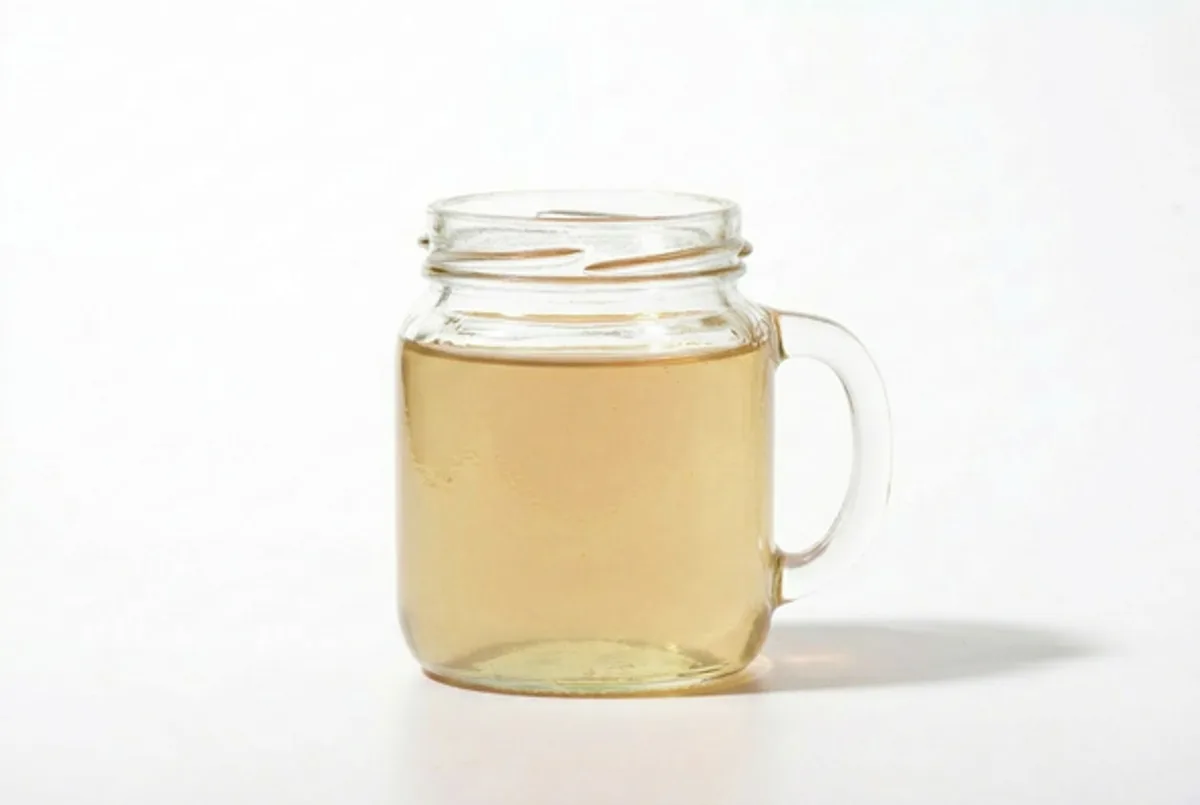
A jar of clover honey — light golden amber, mild and clear.
What it is

The honey that pays American beekeeping's bills.

Clover honey comes from Trifolium repens (white clover) mostly, with smaller contributions from T. pratense (red clover) and T. hybridum (alsike). The plant is a working agricultural crop — planted across millions of acres as a nitrogen-fixing cover and forage for cattle. The honey is a beekeeping byproduct of that agriculture. It is the most common honey on American shelves and the most-tested honey in food-science research.

The character is mild and floral. Light amber color. The locked 9-family Palate Signature places Floral at 8 as a single-note signature — the clover blossom note is the honey's identity, with the other families staying quiet. The honey doesn't fight other flavors. That's why it ends up in everything from tea to recipes.

Geography: white clover grows across the northern US, southern Canada, and is the dominant honey crop in New Zealand. American grocery clover labels rarely tell you what state the honey came from. Cooperatives like the Sioux Honey Association (Sue Bee brand, since 1921) blend across hundreds of member apiaries. Most "100% pure clover honey" on grocery shelves is a blend of states — sometimes a blend of countries. That's not a fraud allegation, just the reality of commercial clover sourcing. Single-source single-state clover exists, but it's the exception.

Crystallizes within 1–3 months. Soft, creamy, spreadable. That's the honey doing what it naturally does — the absence of crystallization is the signal that something was overheated.

Quick facts

Color
White· 26 mm Pfund
Sourced ✓
Source plant
Trifolium repens (white clover dominant); T. pratense + T. hybridum secondary
NOT
Sweet Clover (Melilotus) — different genus, separate page
Geography
Northern US, Canada, New Zealand
Bloom
May–September (4+ months)
Character
Single-note clean floral; the clover-blossom signature
Verified producers
Sue Bee, Local Hive, Nature Nate's, Y.S. Eco Bee Farms
Best for
Tea, baking, breakfast, beginner honey
Where it's made

Northern US, Canada, New Zealand — blended on the shelf.

White clover grows wherever dairy farms grow. American grocery clover rarely tells you which state. The honest framing is to say so.

North Dakota & Upper Midwest

The American clover heartland

North Dakota produces roughly 35–40 million pounds of honey annually — the largest US honey-producing state, with white clover and sweet clover accounting for most of it. Minnesota, Wisconsin, Michigan, and the Dakotas anchor the Upper Midwest production zone. Commercial beekeepers move hives across thousands of clover acres for the May-to-September bloom.

The volume-default American clover, blended across hundreds of apiaries via cooperatives like Sioux Honey Association.

Canadian Prairies

Manitoba, Saskatchewan, Alberta

Canada's prairies grow clover at scale, and significant Canadian honey crosses into US commerce. Bee Maid Honey (Winnipeg, beekeeper-owned cooperative since 1954) anchors the Canadian side with 300+ producer-owners. Manitoba and Saskatchewan honey shows up in US grocery blends regularly.

Canadian-prairie character, often blended into US commerce without a labeling distinction.

New Zealand

North Island + South Island dairy regions

White clover is the dominant honey crop in New Zealand — ubiquitous in NZ pasture for the same dairy-industry reason it's ubiquitous in the US Upper Midwest. NZ clover honey reaches international markets at scale; some of what's labeled "clover" in US retail is NZ-sourced. Different terroir, similar character.

Often blended into international clover commerce; sometimes the "origin unspecified" label points here.

Disambiguation

This is Trifolium. Sweet Clover is Melilotus. Different plants.

The two get confused regularly. They're different genera, different family resemblance, different honey character.

Clover honey on a grocery shelf is Trifolium. White clover (T. repens) is the dominant species; it's a ground-cover plant with round white flower heads. The honey is mild, single-note floral, with the clover-blossom character as its signature.

Sweet Clover is a different plant entirely. Melilotus albus and M. officinalis are taller (3–6 feet), with small white or yellow flowers in long racemes. The plant contains coumarin — the same compound that gives Tonka beans and freshly mown grass their distinctive scent. Sweet Clover honey carries a pronounced vanilla character because of that coumarin. It's a Bakery-leaning honey; this one is a Floral-only honey. The difference is obvious side by side.

If you want the Sweet Clover side of the story — including the coumarin-and-warfarin honest history note — see the Sweet Clover page. This page is the white-clover-and-friends page. Different plants, different honeys, regularly conflated.

The short version. Trifolium = Clover (this page). Melilotus = Sweet Clover (separate page). Both are good honeys. They are not the same honey.
Palate signature

Clover's locked signature is single-note floral — the clover-blossom character lands at 8, with all other families staying quiet. Earlier framings that led with vanilla-cream Bakery (4-visible: Bakery 6, Floral 4, Caramel 4, Herbaceous 3) were sweet-clover (Melilotus) trace bleeding into the descriptor work. White clover's chemistry is the floral note itself, not a multi-family chord.

Floral · 8
8 / 10
clover-blossom, the variety's signature

The other eight families stay at 0 — clover is a single-note honey. The vanilla-cream Bakery, mild Caramel, and grassy Herbaceous descriptors that older clover prose carried are sweet-clover (Melilotus) crossover, not white-clover (Trifolium) character. Honest accounting per §7.8.

What sets it apart

Three things make clover clover.

An agricultural-symbiosis honey at scale, a single-note floral signature, and the discipline of disambiguating against the Melilotus sweet-clover cousin that shares a common name.

01

An agricultural-symbiosis honey at industrial scale.

Clover is planted on millions of acres across North America as a cover crop (it fixes nitrogen in soil, benefiting farmers). A healthy clover stand produces 100–200 pounds of honey per acre — among the highest nectar yields of any temperate flower. The bloom period extends 4+ months (May–September). North Dakota alone produces 35–40 million pounds annually. This is why clover is half the American honey market — agricultural and beekeeping economics align perfectly.

02

A single-note floral signature that doesn't pretend to be more.

The locked 9-family Palate Signature places Floral at 8, with all other families staying quiet. Earlier marketing that put Bakery vanilla-cream or Caramel undertones into the descriptor work was sweet-clover crossover — white clover's chemistry is the floral note itself. That mildness is the variety's strength: it doesn't argue with whatever you pair it with.

03

A disambiguation discipline against the Melilotus cousin.

The most-confused honey pairing in the American market: Trifolium clover (this page) vs Melilotus sweet clover (a separate page). Different genera, different plant heights, different honey character — sweet clover's coumarin gives it a pronounced vanilla register that white clover does not have. The two honeys get conflated because they share a common name; the page-level disambiguation is the discipline.

Under the microscope

The most-tested honey on earth.

Clover is the standard control in honey research — when a study says "a standard honey," it almost always means clover. The named research below characterizes it directly.

Peer-reviewed · Gośliński M et al. 2021
Polish clover honey antioxidant analysis

Characterized phenolic content and antioxidant capacity of clover honey alongside other Polish monofloral honeys. Clean reference for the variety's baseline. Light clover honeys carry lower phenolic content than darker varieties — the trade-off for the mild character.

*Antioxidants*, 10(4):530 · PMID 33805391 · DOI 10.3390/antiox10040530

Peer-reviewed · Paget BW et al. 2023
SWATH-MS proteome comparison

Quantitative comparison of clover and other honey proteomes. Distinct protein signature documented; MRJP6 abundance suggests a clover-specific catalytic role. Useful as the characterization anchor for what makes clover chemically clover, not just sensorily.

*PLoS One*, 18(2):e0272898 · PMID 36763642 · DOI 10.1371/journal.pone.0272898

Peer-reviewed · El-Raie AE et al. 2018
Visible-laser adulteration detection

Visible laser transmission method for detecting water, sugar solution, glucose, and starch adulteration in clover honey. Clover is the most-adulterated variety on the commodity market specifically because it's the most abundant and cheapest to counterfeit; the methods literature exists because the problem exists.

*J Sci Food Agric*, 98(10):3823–3828 · PMID 29352470 · DOI 10.1002/jsfa.8896

Tradition & use

Clover honey in tradition and use.

The kitchen workhorse

Clover sweetens tea without arguing with it. It bakes into cookies and quick breads without competing. It crystallizes within 1-3 months into a soft, creamy spread for toast and biscuits. The mildness IS the use case — clover is the honey for someone who wants a sweetener that gets out of the way, and it has earned that role in millions of American kitchens for over a century.

The food-science reference honey

When food-science papers reference "a standard honey" or "a commercial reference honey" in comparative studies, the sample is almost always clover. This is not a paper finding — it is an observation about why clover gets cited so much. The variety carries the baseline for how the rest of the honey research literature defines "normal." If you want the canonical honey-against-which-others-are-compared, this is it.

The raw-vs-pasteurized honest take

Most grocery clover has been pasteurized — heated to 150–170°F to prevent crystallization and extend shelf life. This destroys glucose-oxidase enzymes, hydrogen-peroxide activity, and heat-sensitive antioxidants. The taste is nearly identical to raw, but the chemistry is hollowed out. If you're buying clover for the raw-honey character, "raw" and "unfiltered" on the label matter; if you're buying for baking, pasteurized grocery clover is perfectly sensible.

Four named US anchors plus a Canadian cross-border cooperative.

Sue Bee / Sioux Honey Association (Sioux City, IA) is the biggest name. Beekeeper-owned cooperative founded 1921 by five Iowa beekeepers pooling capital to build a shared brand. It's now America's #1 honey brand by volume. Clover has been the flagship SKU since founding. The cooperative blends across hundreds of member apiaries — which is what the "blend of states" framing in this page's lede actually describes.

Local Hive / Rice's Honey (Greeley, CO) is the regional-blend specialist. Founded 1924 as Rice's Lucky Clover Honey by L.R. Rice; rebranded to Local Hive in 2018. Twenty-three varietal raw unfiltered honeys including a Colorado clover SKU available at Costco, Kroger, Walmart. The model for "state-of-origin" labeling at grocery scale — if you want a state-specific clover instead of the multi-state blend, Local Hive is the easiest place to find one.

Nature Nate's (McKinney, TX) was founded 1972 by Nate Sheets. Raw & unfiltered, nationally distributed at Amazon, Walmart, HEB. The clover-forward US-sourced SKU is one of the more accessible raw clover lines in mainstream retail.

Y.S. Eco Bee Farms (Sheridan, IL) has been USDA-certified organic since 1995. Pure Premium Clover Honey SKU at iHerb and natural-foods retailers. The longest-running organic clover option.

Bee Maid Honey (Winnipeg, MB) is the cross-border cooperative anchor — beekeeper-owned cooperative since 1954, backed by Manitoba and Alberta producer co-ops with 300+ Western Canadian beekeeper-owners. Significant volume of Canadian-prairie clover reaches US commerce through Bee Maid and other Canadian cooperatives, often blended with US sources.

Marketplace

Melvea-verified jars, independently scored.

Tap any card for details. Rankings are independent of affiliate commissions.
7.3
Wholesome
Organic Raw Clover Honey
USA & Brazil
Mild, sweet, creamy with subtle floral character.
7.0
Runamok High Plains Clover Honey
Runamok
High Plains Clover Honey
Montana/Wyoming
Mild, sweet, creamy with subtle floral character.
7.0
Aunt Sue's
Raw & Unfiltered Clover Honey
United States
Mild, sweet, creamy with subtle floral character.
7.0
Gunter's
Pure Clover Honey
United States
Mild, sweet, creamy with subtle floral character.
6.9
GloryBee
Organic Clover Honey
United States
Mild, sweet, creamy with subtle floral character.
6.7
Sue Bee
Premium Clover Honey
United States
Mild, sweet, creamy with subtle floral character.
6.5
Bee Harmony
Organic American Clover Honey
United States
Mild, sweet, creamy with subtle floral character.
6.1
Dutch Gold Honey
Creamed Clover Honey
United States
Mild, sweet, creamy with subtle floral character.
5.9
Bee Harmony
American Raw Clover Honey
United States
Mild, sweet, creamy with subtle floral character.
5.6
Dutch Gold Honey
Pure American Clover Honey
United States
Mild, sweet, creamy with subtle floral character.

As an Amazon Associate, Melvea earns from qualifying purchases.

Common questions

Eight honest answers about clover honey.

Is clover honey the same as sweet clover honey?

No. Clover is Trifolium (white clover, red clover, alsike). Sweet Clover is Melilotus — a different genus, taller plant, with coumarin in the tissue that produces a pronounced vanilla character in the honey. Different plants, different family resemblance, different honey. There's a separate Sweet Clover page for the Melilotus side; this page is the Trifolium side.

What does '100% pure clover honey' on the label actually mean?

Usually that the honey is predominantly clover-sourced, but is a blend across multiple states or countries. Sue Bee / Sioux Honey Association is a cooperative blending across hundreds of beekeepers in many states. Single-source single-state clover exists at the smaller-producer tier (Local Hive Colorado, regional family operations) but is the exception, not the rule, on grocery shelves.

Who are the verified producers?

Four primary American anchors plus one Canadian cross-border. Sue Bee / Sioux Honey Association (Sioux City IA, beekeeper-owned cooperative since 1921). Local Hive / Rice's Honey (Greeley CO, founded 1924). Nature Nate's (McKinney TX, founded 1972). Y.S. Eco Bee Farms (Sheridan IL, USDA organic since 1995). Bee Maid Honey (Winnipeg MB, beekeeper-owned cooperative since 1954) for the Canadian-prairie side.

Why does clover honey crystallize so fast?

Glucose-to-fructose ratio. Clover honey has a glucose-leaning sugar profile, which crystallizes naturally within 1-3 months at room temperature into a soft, creamy, spreadable texture. This is the honey doing what it does — not a defect. If your clover honey never crystallizes, it's almost certainly been pasteurized (heated above ~150°F) to extend shelf life. Pasteurized honey tastes nearly identical but loses the enzyme activity that distinguishes raw honey.

What does clover honey taste like?

Single-note clean floral — the clover-blossom character at 8 on the 9-family Palate Signature. The other eight families stay quiet. Earlier marketing that put vanilla-cream Bakery or grassy Herbaceous into the descriptor was sweet-clover (Melilotus) trace — white clover (Trifolium) chemistry is the floral note itself, not a multi-family chord.

Does raw clover honey cure seasonal allergies?

The local-raw-honey-treats-allergies hypothesis is one of the most-cited folk claims about honey, but the published evidence is thin and mixed. We don't propagate the claim. If local raw honey seems to help your allergies, we're glad — but we can't cite it as a wellness benefit based on the research.

Why is clover the most-adulterated honey?

Because it's the most abundant and most profitable to counterfeit. Generic 'honey' on grocery shelves is frequently clover-labeled or clover-blended. Common issues: ultrafiltration removes pollen (the forensic fingerprint that proves origin); imported honey gets repackaged as 'Product of USA' because processing happened domestically; HFCS adulteration documented in commodity honey. If something seems off, verify the source. Raw + unfiltered + state-of-origin label + crystallizes within 1-3 months = signals of genuine clover.

Why does clover represent 50% of US honey production?

Perfect alignment of agricultural, botanical, and economic factors. Clover is planted on millions of acres across North America as a nitrogen-fixing cover crop. A healthy clover stand produces 100–200 pounds of honey per acre. The bloom period extends 4+ months (May–September). North Dakota alone produces 35–40 million pounds annually. Agricultural symbiosis (farmers benefit from bee pollination; beekeepers benefit from abundant nectar) drives massive cultivation.

|
Four questions · two minutes · shapes the Melvea Score
References

Sources & further reading.

  1. Airborne-Honey, A.H.L.N.E. (2020). Airborne Honey clover (Trifolium spp.) color reference.”

    Established apicultural reference (NZ producer, est. 1910). Color range documented from production history.

    Airborne Honey product/varietal reference (apicultural)

Spotted in the wild

Real photos of real Clover jars.

From shelves, kitchens, and markets. Add yours — we review every submission.

No photos yet.

Be the first to submit a photo of Clover honey— help build the encyclopedia.

Submit a Cloverphoto →
Ask Mel
Your honey guide
Hey there. Ask me anything about your palate, a variety, or what to taste next.
SUGGESTED