Melvea
European specialty · Robinia pseudoacaciaUpdated May 2026 · 12-min read

Crystal clear, delicately floral, and stays liquid for years.

Acacia honey is a monofloral honey from the nectar of black locust blossoms (Robinia pseudoacacia, also called false acacia), produced mainly in Italy, Hungary, Romania, and Bulgaria.

Acacia honey is among the palest and most floral-dominant honeys in commercial circulation — produced by bees foraging on Robinia pseudoacacia (black locust, "false acacia") across Italy, Hungary, Romania, and Bulgaria. Floral lead at 9, with light Fruity and Bakery support; the fructose-dominant chemistry keeps it liquid for years.

Water White
Color (Pfund 0–8 mm)
2–4 weeks
Bloom (late spring, single-flow)
Italy · Hungary · Romania · Bulgaria
Primary origin
TASTESo light and clean it barely tastes like honey
FUN FACTStays liquid and clear for years — it rarely crystallizes
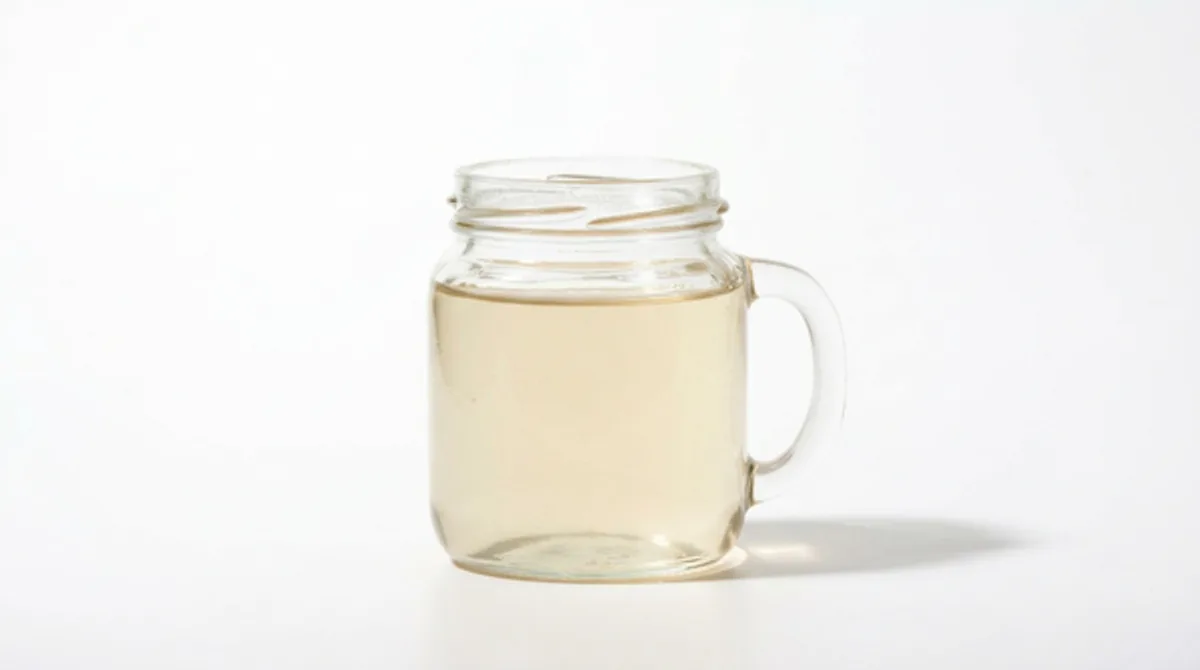
A jar of acacia honey — almost clear, water-white, and crystallization-resistant.
What it is

The floral-dominant honey from Europe's black locust forests.

Acacia honey is produced by bees foraging on the black locust tree (Robinia pseudoacacia), a flowering plant often called "false acacia" despite producing one of the world's most prized honeys. The tree is native to eastern North America — where the same species also yields what American beekeepers (especially in the southern Appalachians) sell as "black locust honey" — but the commercial center of gravity for the variety is Eastern Europe. Italy, Hungary, and Romania dominate global production, drawing on plantings that trace back to the early 1600s, when the royal French gardener Jean Robin received seed from English botanist John Tradescant and propagated the tree at the Jardin du Roi in Paris. The botanical genus name Robinia honors him; the tree spread across Europe over the next two centuries and the honey followed. The bloom is brief — 2 to 4 weeks in late spring — and the nectar flow is intense, which is why a colony can fill supers with a near-monofloral crop in a matter of days.

What makes acacia honey distinctive is its chemistry. With approximately 40% fructose and only 30% glucose (compared to the more typical 38% fructose / 31% glucose of average honey), acacia has an unusually high fructose-to-glucose ratio for a honey. The chemistry is well-documented (Bogdanov et al., 2008) and explains both the honey's low glycemic index (~32–35, characterized in nutritional research) and its crystallization resistance. While most honeys begin to solidify within weeks or months, pure acacia can stay liquid and pourable for 2–3 years or longer.

The flavor is equally distinctive: floral-dominant, with subtle vanilla and faint fruit undertones. The locked 9-family Palate Signature lands Floral at 9 (the variety's signature), with Fruity 3 and Bakery 3 as supporting families — and the other six staying quiet. Its pale, almost clear appearance (due to an unusually low pollen count) makes it visually unique as well. This is the honey for people who want a clean, floral sweetener that gets out of the way — ideal for delicate teas, soft cheeses, and applications where you do not want honey flavor to compete.

Quick facts

Color
Water White· 2 mm Pfund
Sourced ✓
Source plant
Robinia pseudoacacia (black locust, "false acacia")
Sibling pages
Akashia (Japanese, same species) · Acacia senegal (African true acacia)
Origin
Italy, Hungary, Romania, Bulgaria
Taste
Floral-dominant, faint vanilla, light fruit
Texture
Very liquid, smooth, pourable
Crystallization
Very slow (2–3+ years)
Glycemic Index
~32–35 (low end of common honeys)
Composition characterization

What the fructose-chemistry composition review documents.

Acacia's composition is well-documented in the honey-nutrition literature. Bogdanov et al. 2008 is the standard reference for honey composition and the fructose-dominant chemistry of Robinia pseudoacacia honey specifically.

Bogdanov, Jurendic, Sieber, and Gallmann (2008) published a wide-ranging composition + properties review of honey across the major monofloral varieties in the Journal of the American College of Nutrition. The full citation lives in the Sources section as src-1. The paper characterizes Robinia pseudoacacia (acacia) honey as carrying an unusually high fructose-to-glucose ratio compared to typical honey averages — chemistry that underlies both its low glycemic index measurement and its years-long resistance to crystallization.

The paper is a composition review, not a clinical trial. The low-GI finding describes the chemistry of the nectar across measured samples — a composition fact about what's in the jar — not a clinical claim about what happens in any individual's body. Individual blood-sugar response to any sweetener (including acacia honey) varies; that variation isn't measured here and isn't framed as a wellness or medical outcome on this page.

The same paper is the standard reference for the broader honey-composition literature across other Melvea variety pages (Tupelo's F:G ratio + chem-barchart anchor; orange-blossom and wildflower antioxidant baseline). Here it anchors acacia's distinctive fructose-dominant composition and the years-long liquid stability that follows from it — composition characterization, nothing more.

European production · American sibling

Four European countries and one American sibling region.

Acacia honey is overwhelmingly a European product at commercial scale. Hungary is the international benchmark for clarity and mildness, producing 8,000+ tons annually from the Great Hungarian Plain — the most established acacia region in the world. Hungarian akácméz carries strong national identity (the country produces more Robinia honey per capita than any other), is a candidate for EU Protected Designation status under EU food-quality frameworks, and remains the reference standard the rest of European acacia is compared to. Romania produces 4,000–5,000 tons annually from the Carpathian foothills, with quality nearly matching Hungarian and growing organic options. Italy focuses on small-scale, organic, single-origin production from Piedmont and Friuli — slightly more body and complexity than the Eastern European producers; the artisanal-credibility anchor. Bulgaria rounds out the major European supply at 1,000+ tons annually, expanding rapidly with increasing EU certification.

The American sibling region is the southern Appalachians — particularly Virginia, West Virginia, North Carolina, and Tennessee — where the same Robinia pseudoacacia (sold there as "black locust honey" or "American acacia") delivers the same chemistry and the same water-white character from native stands rather than European plantings. The black locust is in fact native to this range; the European plantings descend from it. Appalachian production is small, regional, and rarely reaches international shelves, but for American buyers it is the same product under a different name — and worth knowing the equivalence so a "black locust honey" jar from a North Carolina apiary is read as what it is: acacia.

While each region produces distinct acacia honey, all of it shares the same core properties: clarity (water-white to extra-light color), Floral-dominant signature, and resistance to crystallization. Regional differences are subtle — primarily in mouthfeel and the degree of delicacy. Hungarian honey is the international standard for the mildest, clearest acacia; Italian honey offers the most artisanal production story; Appalachian honey carries the native-range provenance. For practical purposes, any authentic Robinia pseudoacacia honey (Hungary, Romania, Italy, Bulgaria, or the American southern Appalachians) will deliver the functional properties the variety is known for: liquid stability, low GI from fructose chemistry, and floral-dominant sweetness. Regional choice often comes down to availability, brand reputation, and certification rather than dramatic quality differences.

European producers

Four countries, four production registers.

Acacia is overwhelmingly a European commercial product. Each region brings its own scale, regulatory posture, and quality benchmark.

Hungary 🇭🇺

The Great Hungarian Plain · the benchmark standard

8,000+ tons annually — the most established acacia region in the world. Hungarian honey is the international benchmark for clarity, mildness, and consistency. Commands premium positioning globally.

The reference standard most other European acacia is compared to.

Romania 🇷🇴

Carpathian foothills · quality + volume

4,000–5,000 tons annually from the Carpathian foothills. Nearly as clear and mild as Hungarian, with growing organic options. Excellent quality and the more accessible of the major European producers.

The "value Hungarian" — comparable quality at a slightly more accessible scale.

Italy 🇮🇹

Piedmont · Friuli · artisanal excellence

Smaller scale, focused on organic and small-batch. Slightly more body and complexity than the Eastern European producers; artisanal credibility. Primary regions: Piedmont, Friuli.

The artisanal-positioning option — organic standards and provenance the others rarely match.

Bulgaria 🇧🇬

Growing producer · expanding rapidly

1,000+ tons annually — expanding rapidly. Similar quality to Romanian; increasingly EU-certified. Emerging supply with competitive positioning in specialty markets.

The newer entrant with growing visibility in EU certification frameworks.

One name, three plants

The acacia name covers three different plants — here is the map.

The "acacia" label is overloaded across Melvea pages, the global honey market, and modern botany itself. The 2011 Melbourne International Botanical Congress formally retypified the genus Acacia onto the Australian wattles — meaning the "true Acacia" today is genuinely Australian, while the African gum-arabic trees were reassigned to Senegalia and Vachellia, and the European "acacia" honey was never an Acacia to begin with. This page is the consolidation; the goal is for "acacia honey" naming to finally make sense in one place.

Acacia (this page) — Robinia pseudoacacia across global production. The honey labeled "acacia" in shops worldwide comes from Robinia pseudoacacia, commonly known as black locust or "false acacia." Native to eastern North America (where it is also sold as "black locust honey," primarily through the southern Appalachians), naturalized across Eastern Europe — Italy, Hungary, Romania, and Bulgaria dominate commercial honey production — and carried east to Japan through late-19th and early-20th-century plantings, where the same species is sold as akashia (the Japanese transliteration of "acacia"). The cultural register shifts across these regions — European acacia is positioned as a delicate specialty, akashia is Japan's default refined honey from Hokkaido and Nagano, Appalachian "black locust" is a regional craft product — but the chemistry, the Floral-dominant signature, and the years-long liquid stability are the same species, the same product, covered here. Despite the common name, Robinia is not an Acacia tree. The genus Robinia honors Jean Robin, the early-1600s royal gardener who first cultivated the tree in Paris; the leaves resemble true acacia, the species sit in the same Fabaceae legume family, but the genera are entirely separate. The name "acacia honey" stuck because early European apiarists called it that.

Acacia senegal (separate page) — the African gum-arabic tree. Post-2011 botanical retypification, this species is formally Senegalia senegal, but it remains widely cataloged as Acacia senegal and is referred to as such commercially. Native to the Sahel — Senegal to Sudan, with additional native range in Oman and western India — it is primarily a gum-arabic tree; honey is a secondary product harvested from colonies foraging the white spike flowers during the wet season. Amber color, rapid crystallization, very different from European acacia. Some Sahelian producers sell genuine Senegalia senegal honey on specialty markets, but the supply chain is small and (since 2023) seriously disrupted by Sudan's civil conflict in the Kordofan and Darfur gum belt.

True Australian Acacia — the wattles, no monofloral honey. This is the genus that "Acacia" formally refers to after 2011. The Australian wattles (over 1,000 species — Acacia sensu stricto) do not yield a monofloral honey: extrafloral nectaries on the leaves serve ant defense, not pollinator reward, and bees take pollen rather than nectar from the flowers themselves. Wattle honey exists as a name on packaging now and then, but there is no established sensory record and no commercial monofloral supply — a parked slug on Melvea, not a product page.

The short version. The "acacia honey" on a European or American shelf is Robinia pseudoacacia (this page — also sold as "black locust honey" in the American southern Appalachians and as akashia in Japan). The African gum-arabic tree (now Senegalia senegal, historically Acacia senegal) is a different product with its own page. The true post-2011 Acacia genus is Australian and produces no monofloral honey. Three plants, one consolidated naming map.
Palate signature

Acacia's locked signature is Floral 9 — the dominant black-locust-blossom note that defines the variety. Fruity 3 and Bakery 3 sit as supporting families, contributing the faint vanilla and light-fruit undertones the prose has historically described. The other six families stay quiet; this is a single-source delicate honey, not a multi-family chord.

Floral · 9
9 / 10
black-locust blossom; the variety's defining signature
Fruity · 3
3 / 10
faint fruit undertone
Bakery · 3
3 / 10
soft vanilla note

Herbaceous, Spicy, Woody, Nutty, Caramel, and Earthy all stay at 0. Acacia is a delicate, Floral-dominant honey — the chemistry is fructose-driven and the sensory signature is the black-locust blossom note with a faint vanilla-and-fruit edge. No multi-family chord.

What sets it apart

Three things make acacia, acacia.

A fructose-dominant chemistry, a years-long liquid stability, and a Floral-dominant delicate signature — the three properties the variety is bought for.

01

A fructose-dominant chemistry with a low glycemic index.

Acacia carries approximately 40% fructose and only 30% glucose — an unusually high fructose-to-glucose ratio for a honey. The chemistry is well-documented (Bogdanov et al., 2008). The resulting glycemic index sits at the low end of common honeys (~32–35), which is a characterization fact (chemistry of the nectar), not a wellness claim. Acacia is still honey, still sugar, and still a sweetener.

02

A years-long liquid stability — virtually crystallization-proof.

The same fructose-dominant chemistry that produces the low GI also explains the famous liquid stability. Glucose molecules naturally crystallize over time; fructose resists crystallization. With acacia's fructose-dominant composition, glucose crystallization is rare, and the honey stays pourable for 2–3 years or longer at room temperature. Most honeys solidify within weeks to months; acacia is the exception.

03

A Floral-dominant delicate signature that gets out of the way.

The locked 9-family Palate Signature lands Floral at 9 (the black-locust-blossom note), with Fruity 3 and Bakery 3 supporting. This is the honey for people who want sweetness without flavor intrusion — for delicate teas, soft cheeses, and applications where you do not want honey to compete with what it is paired with. The neutrality is intentional and structural.

Tradition & use

Acacia honey in tradition and use.

The tea-purist pairing tradition

Acacia's defining use case is tea. The Floral-dominant signature and crystallization-resistant liquid texture make it the honey of choice for delicate teas — white, green, jasmine, light oolong — where assertive honey character would mask the leaf. Stir into cooled (below 95°F) tea or coffee; the sweetness comes through without competing flavors. Expensive, delicate teas where you want to taste the tea rather than the sweetener: acacia is the standard answer.

The cheese-board neutrality

Drizzle on soft cheeses, paired with cured meats and nuts. Acacia's clarity and Floral-dominant character complement delicate cheeses that would be overpowered by darker, stronger honeys. Stays liquid on the board for easy serving — no crystallization to manage mid-meal. Use it where you want a finishing sweetness that complements rather than overshadows.

A tea-and-yogurt morning workhorse

Swirl into plain yogurt or drizzle on oatmeal without adding strong honey flavor. The fructose-dominant chemistry is why acacia measures at the low end of the honey GI range — a composition fact, not a wellness claim. Acacia delivers honey's nutritional density (enzymes, antioxidants, trace minerals) in its most neutral form — without taste competition. The breakfast workhorse for someone who wants honey without honey flavor.

Storage discipline — never refrigerate

The cardinal rule with acacia: never refrigerate. Cold accelerates crystallization, defeats the entire purpose of buying a honey that stays liquid, and makes it hard to use. Keep acacia sealed at room temperature, away from direct sunlight and heat sources. Properly stored, pure acacia stays pourable for 2–3 years or more.

European acacia is both an artisanal product and a commodity ingredient.

Acacia honey occupies a rare market position: it is simultaneously a premium artisanal product and a bulk commodity ingredient. The artisanal lane runs through Italian organic producers (Rigoni di Asiago), Hungarian single-origin specialists (BELLROYAL), and German importers (Breitsamer) — small-batch, single-origin, often organic-certified, with emphasis on terroir and traditional beekeeping.

The commodity lane runs through large-scale, blended supply to food manufacturers, beverage companies, and pharmaceutical producers — yogurt sweetening, coffee syrups, capsule coatings, cosmetics. Acacia's crystallization resistance and neutral flavor make it the preferred bulk sweetener for industrial applications where other honeys would solidify or interfere with flavor profiles.

The same chemistry that makes acacia valuable to the artisanal market (low GI, liquid stability, neutral floral signature) also makes it valuable to the industrial market (won't crystallize in processing, won't interfere with flavor formulations). These properties don't cost more to produce — acacia naturally has them. The market has learned to appreciate and pay for them in retail; manufacturers buy them in bulk for the functional benefits.

Marketplace

Melvea-verified jars, independently scored.

Tap any card for details. Rankings are independent of affiliate commissions.
7.6
Rigoni di Asiago
Mielbio Organic Italian Acacia Honey
Italy
Delicate, light floral with a subtle sweetness and mild flavor profile.
7.3
Apicoltura Brezzo
Piedmont Acacia Honey — Italian
Italy
Delicate, light floral with a subtle sweetness and mild flavor profile.
6.7
Trevi
Italian Raw Acacia Honey
Italy
Delicate, light floral with a subtle sweetness and mild flavor profile.
6.7
Beekeeper's Daughter
Locust Blossom Raw Honey
Delicate, light floral with a subtle sweetness and mild flavor profile.
6.7
Goshen Honey
Raw American Acacia Honey
United States
Delicate, light floral with a subtle sweetness and mild flavor profile.
6.4
Wild About Honey
Raw Hungarian Acacia Honey
Hungary
Delicate, light floral with a subtle sweetness and mild flavor profile.
6.4
Wild About Honey
Raw Hungarian Acacia Honey
Hungary
Delicate, light floral with a subtle sweetness and mild flavor profile.
6.3
d'arbo
All Natural Acacia Honey
Austria & Eastern Europe
Delicate, light floral with a subtle sweetness and mild flavor profile.
6.1
Langnese
Acacia Honey
Germany
Delicate, light floral with a subtle sweetness and mild flavor profile.
6.1
Foxes Honey
Raw Acacia Honey
Romania
Delicate, light floral with a subtle sweetness and mild flavor profile.
6.1
Foxes Honey
Australian Acacia Honey
Australia
Delicate, light floral with a subtle sweetness and mild flavor profile.
5.8
Hédène
Acacia
Burgundy
+ Add photo
Hédène
Acacia Honey
Burgundy
Delicate, light floral with a subtle sweetness and mild flavor profile.

As an Amazon Associate, Melvea earns from qualifying purchases.

Common questions

Seven honest answers about acacia honey.

What does acacia honey taste like?

Floral-dominant with faint vanilla and light fruit undertones. The locked 9-family Palate Signature lands Floral at 9 (the black-locust-blossom note that defines the variety), with Fruity 3 and Bakery 3 supporting. The other six families stay quiet. This is the honey that gets out of the way — sweetness without flavor competition. Ideal for delicate teas, soft cheeses, and applications where you do not want honey to dominate.

Why does acacia honey stay liquid when other honeys crystallize?

Crystallization is driven by glucose content. Acacia has approximately 40% fructose and only 30% glucose — an unusually high fructose-to-glucose ratio for a honey. Fructose resists crystallization, so acacia stays pourable for 2–3 years at room temperature while most honeys solidify within weeks to months. This is not processing — it is the natural chemistry of black locust nectar (Bogdanov 2008).

Why does 'acacia honey' come from a black locust tree?

Naming convention, not botanical accuracy. The honey labeled 'acacia' comes from Robinia pseudoacacia — commonly called black locust or 'false acacia.' The plant is in the legume family along with true acacias but is a different genus, named for Jean Robin, the early-1600s royal gardener who first cultivated the tree in Paris. The name 'acacia honey' stuck because early European apiarists called it that. When you see 'acacia honey' on a European or American shelf, it means Robinia pseudoacacia — not the African gum-arabic tree (now formally Senegalia senegal, historically Acacia senegal, which has its own page), and not Australian true Acacia / wattle (which does not produce a commercial monofloral honey).

Is 'black locust honey' the same as acacia honey?

Yes — same species, different name. American beekeepers (especially in the southern Appalachians: Virginia, West Virginia, North Carolina, Tennessee) often sell Robinia pseudoacacia honey as 'black locust honey,' since the tree is native to that range and that is the common American name. European producers sell the same honey from the same species as 'acacia.' A jar of Appalachian 'black locust' is the same chemistry, the same water-white color, the same Floral-dominant signature, and the same years-long liquid stability as a jar of Hungarian akácméz. The Melvea catalogue treats them as one variety on this page.

How do I know my acacia honey is real and not adulterated?

Buy from producers with specific country of origin (Hungary, Italy, Romania, Bulgaria — not just 'EU'), batch/lot numbers, and laboratory certificates. Real acacia stays liquid for years — if it crystallizes within months, it is likely mislabeled or blended. Check that the producer name is traceable. The European acacia market is well-regulated under EU food standards.

Can I substitute acacia for other honeys in baking?

Yes, at a 1:1 ratio by volume. Acacia will produce a lighter, more neutral result than darker honeys. It will not add the deep caramel notes of buckwheat or the complexity of wildflower. Honestly, acacia is overkill for baking — its premium properties (low GI, liquid stability, neutral flavor) are wasted when you are heating it. Save acacia for tea and unheated applications; use clover or wildflower for baking.

Is acacia honey safe for infants?

No honey of any kind should be given to children under 12 months of age due to the risk of infant botulism. This applies to all honey varieties, including acacia, regardless of how mild or pure they are. For children over one year, acacia is a safe and gentle honey choice.

|
Four questions · two minutes · shapes the Melvea Score
References

Sources & further reading.

  1. Albu et al. (2021). Botanical Authentication of Romanian Honeys based on Physicochemical Screening.”

    Physicochemical screening including Pfund color across multiple Romanian monoflorals.

    Agriculture, 11(3):247 · DOI 10.3390/agriculture11030247
  2. Czipa, N. et al. (2019). Composition of acacia honeys following processing, storage and adulteration.”

    Forty-four Hungarian acacia honey samples assessed across diastase activity, HMF, total phenolic content, conductivity, color, pH, proline, moisture, and sugar profile, plus elemental concentrations. Examined effects of processing (centrifugation, filtration, heating), adulteration (sugar syrups), and storage conditions. Species-level findings — fructose-dominance, pale color, slow crystallization — apply to Robinia pseudoacacia honey globally including Japanese akashia.

    J Food Sci Technol, 56(3):1245-1255 · PMID 30956304 · PMC PMC6423237 · DOI 10.1007/s13197-019-03587-y
  3. Bogdanov, S. et al. (2008). Honey for Nutrition and Health: A Review.”

    Comprehensive review article from Swiss Bee Research Centre covering honey composition, nutritional contribution of its components, physiological effects. Documents fructose:glucose ratios across botanical sources, glycemic index variation by floral source (32-85 range), and trace components. Foundational reference for monofloral composition comparisons.

    Journal of the American College of Nutrition, 27(6):677-689 · PMID 19155427 · DOI 10.1080/07315724.2008.10719745

Spotted in the wild

Real photos of real Acacia jars.

From shelves, kitchens, and markets. Add yours — we review every submission.

No photos yet.

Be the first to submit a photo of Acacia honey— help build the encyclopedia.

Submit a Acaciaphoto →
Ask Mel
Your honey guide
Hey there. Ask me anything about your palate, a variety, or what to taste next.
SUGGESTED